In the wake of the assassination of reactionary influencer Charlie Kirk, politicians from both parties have decried political violence, with nearly all of them, along with the op-ed pages of the mainstream newspapers, stating that political violence doesn’t work, and that violence cannot, and should not, be used to advance political goals. Out of self preservation, politicians have to decry and condemn political violence, and newspapers have become far more decorous during the second Trump administration, but stating that political violence doesn’t work is a lie. Throughout history political violence, whether through armed rebellion, or assassination, has worked to achieve the goals of those perpetrating the violence.
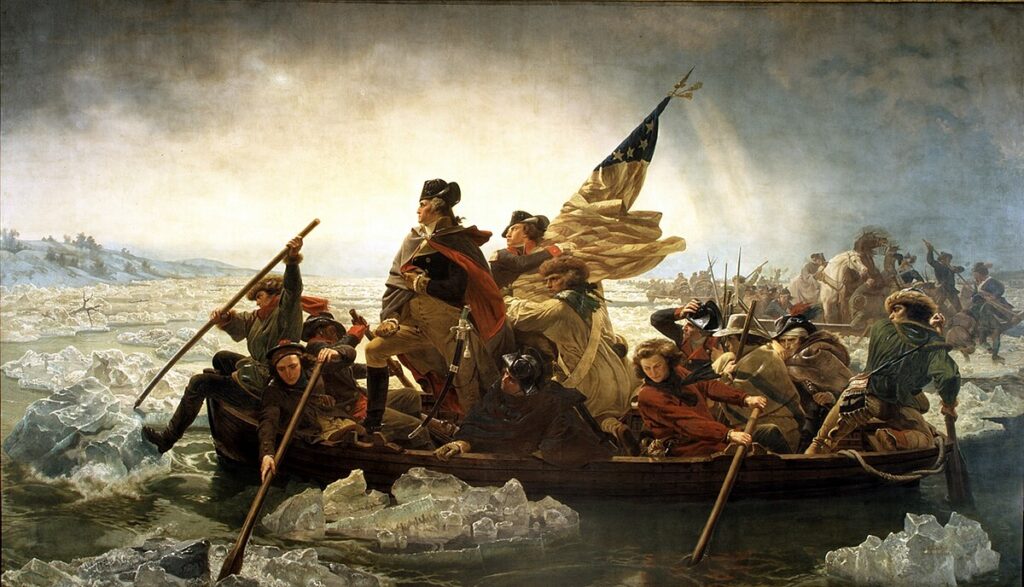
The tallest monument in our nation’s capital is dedicated to George Washington, who in addition to being our first president, led the Continental Army in an armed rebellion against the United Kingdom of Great Britain, the legally constituted government of the North American colonies. While we love to use taxation without representation, and the suppression of self government in Massachusetts after the Boston Tea Party in 1773 as noble casus belli, the bottom line is far more prosaic: the colonists were using violence to achieve their political goals of self-government, and ultimately, complete independence from the British Empire. The skirmish between British troops and colonial militiamen at Lexington on 19 April, 1775, began because the British, the legally constituted government of Massachusetts, sought to disarm the colonial militia before it could foment an insurrection. The skirmishes at Lexington and Concord grew into open revolt that lasted for the next eight years, resulting in the deaths of approximately 25,000 British soldiers who were fighting to maintain the very governmental structures the American colonists were seeking to destroy. But, the political violence perpetrated by the American colonists achieved the goal they sought: independence from the United Kingdom.
Another example of political violence achieving the perpetrators’ results is the relentless campaign of terror waged by the Jewish insurgency against the British rule of Palestine from 1944-1948. From the assassination of Lord Moyne, the British Minister of State for the Middle East in November of 1944, to the devastating bombing of the King David Hotel in July of 1946, which killed over 90 people, the Jewish insurgency’s use of violence forced the exhausted British to submit the matter of Palestine to the United Nations for partition and settlement, and for the British to cease ruling the territory it had gained from defeating the Ottoman Empire in the First World War.
When it comes to political violence via the route of assassination, the results tend to be mixed, but successes tend to outweigh failures. John Wilkes Booth’s assassination of President Abraham Lincoln on 14 April, 1865, achieved Booth’s goal to continue White supremacy in the conquered states of the former Confederacy. Lincoln’s death yielded the presidency to Andrew Johnson, a committed White supremacist, and it deprived the nation of Lincoln’s pragmatic and empathetic leadership when it was most needed.
In 1881 Tsar Alexander II was assassinated by members of the People’s Will, an anarchist group dedicated to the overthrow of the Tsarist autocracy. Alexander II, who ended serfdom in 1862, was a true reformer, and he was doing everything within his power to transform the Russian government from an absolute autocracy into a government that represented the people. A pragmatic reformer, like Tsar Alexander II, is the most dangerous thing to a group like the People’s Will, which is hellbent on destroying the system the reformer is trying to save. Tsar Alexander II had just signed the Loris-Melikov constitution, which would have created two legislative commissions of indirectly elected representatives, when he was assassinated by members of the People’s Will on 13 April, 1881. His son, who became Tsar Alexander III, ruthlessly crushed any and all opposition to his rule, but his oppression, combined with the asinine rule of his son, Tsar Nicholas II, ultimately led to the destruction of Tsarist Russia in 1917. The assassination of Tsar Alexander II, like the assassination of President Lincoln, achieved what the perpetrators believed couldn’t be achieved via an election or a referendum. As one of my CCD teachers, who volunteered in Mississippi during 1964’s Freedom Summer, said:
“Violence is a reaction to a situation that has become intolerable.”
Not all assassinations yield the results that the assassins are hoping for. The goal of the generals who overthrew and murdered South Vietnamese President Ngo Dinh Diem in November of 1963 was to create a government that would be able to effectively combat the Viet Cong insurgency, and that would please the United States, South Vietnam’s most important foreign sponsor. Instead, that act of political violence unleashed in a wave of political instability in South Vietnam. A mere two months after the overthrow and murder of President Diem, the generals who perpetrated this act of political violence were hoisted on their own petard, when a rival group of generals overthrew them. In September and December of 1964 groups of rival generals made coup attempts, and in February of 1965 yet another coup attempt occurred, with this one being successful. North Vietnam exploited this period of instability to massively re-arm the Viet Cong forces operating inside South Vietnam, while simultaneously moving its own battle-hardened army into the South. As South Vietnam’s generals spent more and more time undermining their government with acts of political violence, larger swaths of their country came under control of the Viet Cong insurgents, ultimately pushing American policy makers to make the fatal decision to take over the combat mission in the spring of 1965.
In conclusion, when politicians state that political violence doesn’t work, they’re simply lying. They would be telling the truth if they stated that political violence, whether it occurs via the armed rebellion that created this country, or assassination, isn’t the preferred method to achieve political change, but it is an effective method. As the old saying goes:
It isn’t nice to get arrested
It isn’t nice to go to jail
There are nice ways of doing things
But nice ways often fail